
Research peptides ranked by price per milligram in 2026
Best overall: compare the same peptide using batch-verified peptide content. Best for initial screening: compare matched labeled quantities; best for procurement planning: compare total acquisition requirements. For 2026, rank research peptides price per milligram only after identity, quantity, and analytical documentation match—not by treating different compounds as interchangeable purchases.
- Research peptides price per milligram comparisons require matched compound identity, mass basis, and analytical documentation.
- Evaluate Alpha Omega Peptide research peptides against the same batch-level sourcing criteria as other suppliers.
- HPLC purity is not a measurement of peptide content per vial.
- Use labeled mass for screening; use verified peptide content for a stronger purchasing comparison.
Why this matters
A lower apparent cost per milligram does not establish a better laboratory purchase. Different sequences, chemical forms, analytical methods, and definitions of mass can make superficially similar listings unsuitable for direct comparison.
For laboratory buyers evaluating Alpha Omega Peptide, the best research peptide comparison starts with matched specifications, not vial size. Establish what your experiment requires before sorting procurement options by unit cost.
Keep two decisions separate: selecting the research material and selecting its supplier. A different compound does not become an appropriate substitute simply because its mass-normalized cost is lower.
What makes the best price-per-milligram comparison
Use these criteria before building your 2026 sourcing table:
- Matched identity: Confirm the sequence, terminal modifications, conjugation, and chemical form relevant to your experiment.
- Defined mass basis: Distinguish labeled vial mass, total dry material, and measured peptide content.
- Batch traceability: Connect the offered material to its certificate of analysis, or COA.
- Relevant analytical evidence: Check what each method measures rather than treating every analytical result as equivalent.
- Consistent acquisition scope: Compare quotations on the same purchasing basis, with additional procurement requirements recorded separately.
- Experimental fit: Reject materials that fail your laboratory's acceptance criteria before considering their relative cost.
The best unit-cost comparison uses the same analyte and the same denominator. A spreadsheet cannot correct a mismatch in the material being compared.
Comparison methods at a glance
The ranking below orders comparison methods by their usefulness for laboratory purchasing. It is not a claim that one peptide sequence is a cheaper substitute for another.
| Rank and method | Best for | Standout feature | Key limitation |
|---|---|---|---|
| 1. Verified peptide-content comparison | Final selection between matched materials | Uses a documented peptide-mass denominator | Requires a suitable quantitative measurement |
| 2. Matched labeled-mass comparison | Initial supplier screening | Uses information from the quotation or label | Labeled mass does not establish measured content |
| 3. Acquisition-scope comparison | Budgeting an accepted purchase | Includes procurement requirements beyond material alone | Does not resolve analytical differences |
| 4. Cross-compound price comparison | Mapping a research purchasing portfolio | Organizes spending across different analytes | Cannot establish experimental interchangeability |
1. Verified peptide content: best for final supplier selection
A verified peptide-content comparison divides the quoted material amount by a documented quantity of the peptide itself. It is the strongest denominator when you are comparing otherwise matched research materials and the quantitative method is appropriate for that material.
Start with identity. Confirm that both offers describe the same sequence and relevant modifications, then examine how peptide content was determined. Do not substitute a chromatographic purity percentage for a quantitative content measurement.
Verified peptide-content comparison pros:
- Aligns the denominator with the analyte being purchased.
- Separates peptide quantity from unrelated components of dry material.
- Supports a clearer comparison between matched supplier quotations.
- Creates a documented basis for purchasing review.
Verified peptide-content comparison cons:
- Requires analytical information beyond a simple listing.
- Remains dependent on the suitability and reporting of the quantitative method.
- Does not establish that the material meets every experimental requirement.
Best for: Laboratory purchasing teams choosing between technically acceptable offers for the same research peptide.
For Alpha Omega Peptide research peptides, apply this standard without exceptions based on brand familiarity. The purchasing record should connect the offered batch, reported content, and relevant analytical documentation.
Verdict: Buy only after identity, content basis, and laboratory acceptance criteria align.
2. Matched labeled mass: best for initial supplier screening
A labeled-mass comparison uses the quantity stated on the listing, label, or quotation. It provides a straightforward first pass when you need to organize comparable offers before requesting deeper documentation.
Normalize the units before calculating anything. 1 mg equals 1,000 µg, and 1 g equals 1,000 mg. A unit mismatch creates an arithmetic error even when the underlying supplier information is accurate.
Matched labeled-mass comparison pros:
- Provides a consistent starting point for organizing quotations.
- Makes different package quantities easier to compare.
- Helps identify which offers need clarification before review.
Matched labeled-mass comparison cons:
- Does not independently verify the quantity supplied.
- Can hide differences in how suppliers define the stated mass.
- Does not establish identity, purity, or suitability for an assay.
Best for: Creating an initial shortlist of offers that describe the same research material.
Record the label wording exactly. If one offer refers to peptide content and another refers to total material, leave them in separate categories until the supplier clarifies the distinction.
For a 2026 procurement worksheet, include the quotation date beside the labeled quantity. Keep the original quotation attached so a later reviewer can reconstruct the comparison without relying on copied spreadsheet values alone.
Verdict: Hold as a screening result until the mass basis and batch documentation are checked.
3. Acquisition scope: best for laboratory budget planning
An acquisition-scope comparison considers the purchasing requirements surrounding an otherwise acceptable material. These can include delivery arrangements, required documentation, and additional analytical work specified by your laboratory.
Keep this calculation separate from the peptide-content comparison. Combining unrelated procurement requirements with an unclear mass denominator makes the final figure harder to interpret, not more informative.
Acquisition-scope comparison pros:
- Connects material selection to the laboratory's purchasing requirements.
- Makes separately quoted procurement items visible.
- Helps distinguish material evaluation from order administration.
Acquisition-scope comparison cons:
- Depends on the actual terms of each quotation.
- Does not correct a mismatch in compound identity or content measurement.
- Can become misleading if different purchasing scopes are combined.
Best for: Budget approval after a research material passes technical review.
Build this comparison from the applicable quotation and your laboratory's requirements. Do not infer a supplier's delivery terms, documentation services, or testing arrangements from another supplier's practices.
Verdict: Buy only when both the material and the acquisition requirements meet your purchasing criteria.
4. Cross-compound comparison: best for portfolio reporting
A cross-compound table groups different research peptides by their mass-normalized purchasing figures. It can organize a laboratory's purchasing portfolio, but it does not identify which compound belongs in an experiment.
Different peptides have different molecular identities. Even equal masses do not represent equal numbers of molecules when molecular weights differ, so a mass-only ranking cannot answer a molar-quantity question.
Cross-compound comparison pros:
- Organizes purchasing records across different analytes.
- Makes the basis of a budget summary explicit.
- Separates portfolio reporting from supplier selection.
Cross-compound comparison cons:
- Does not establish functional equivalence between compounds.
- Does not account for differing molecular weights.
- Encourages the wrong decision if interpreted as a substitute-selection guide.
Best for: Internal purchasing summaries where each compound's identity remains visible.
Label this table as portfolio reporting, not a recommendation to replace one analyte with another. Research design determines the compound; procurement analysis determines how to compare acceptable offers for that compound.
Verdict: Skip cross-compound rankings as a basis for experimental substitution.
Build a defensible research peptide purchasing worksheet
Use a repeatable sequence for every 2026 comparison. Keep technical acceptance ahead of commercial sorting so an unsuitable offer never becomes the apparent winner.
Identity check
Record the compound name, sequence information, modifications, and relevant chemical form. Resolve ambiguous descriptions before treating two offers as equivalent.
Batch match
Connect the offered batch to its analytical documents. A report for another batch does not establish the characteristics of the material under consideration; use the COA batch lookup workflow as a companion topic for this review.
Mass basis
Write down whether the denominator is labeled mass, total dry material, or measured peptide content. Do not silently replace one with another when filling spreadsheet cells.
Quote scope
Record the quotation date and exactly what the offer covers. Keep separate procurement requirements identifiable rather than burying them in an unexplained total.
Acceptance decision
Apply your laboratory's documented criteria before ranking acceptable offers. Record why an offer passes, requires clarification, or is excluded.
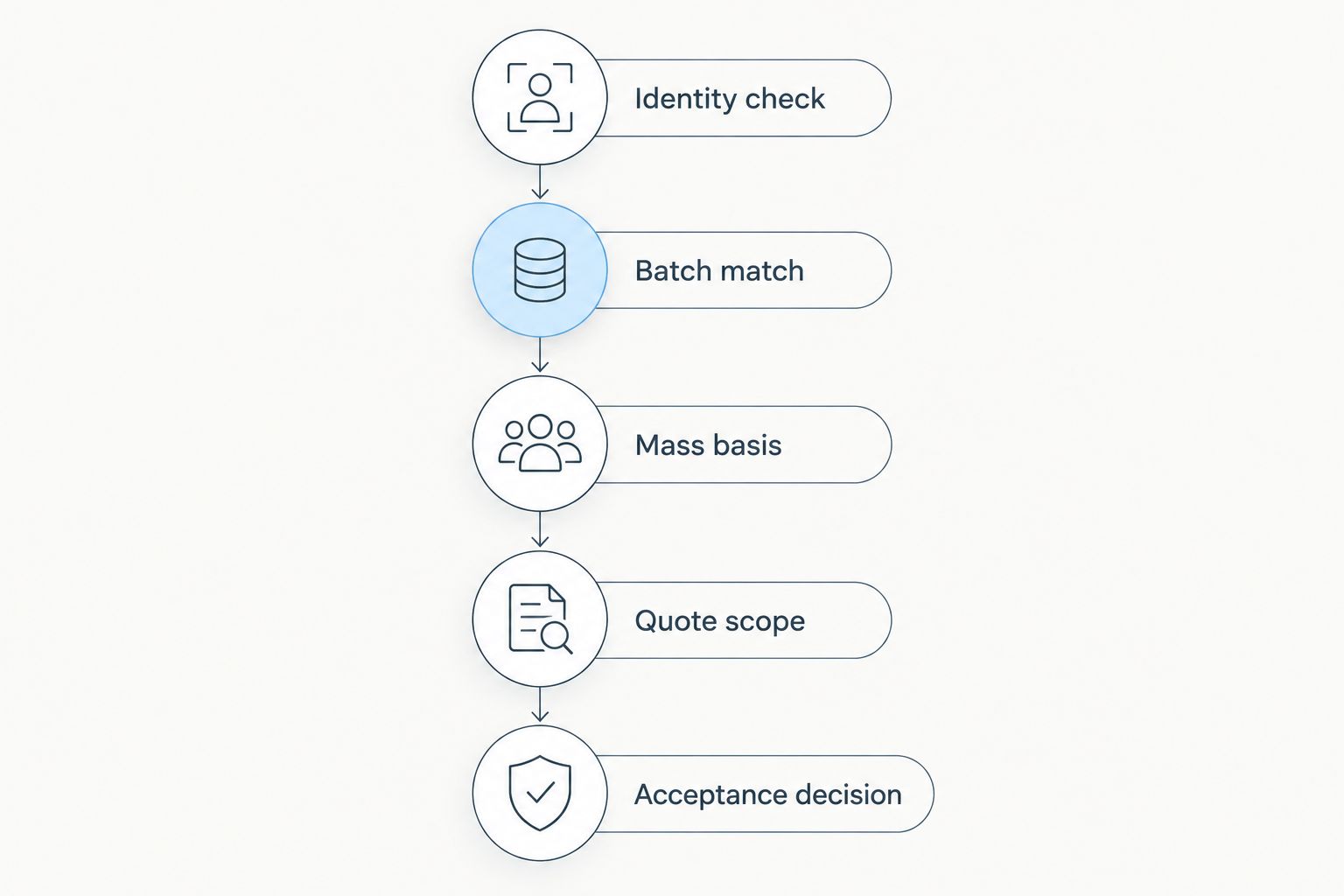
The worksheet should let another researcher reproduce the purchasing decision from the attached records. A sorted column alone is not an adequate explanation of why a material was selected.
Why HPLC purity is not peptide content
HPLC separates components under specified analytical conditions. A reported chromatographic purity percentage describes the result obtained under that method; it does not, by itself, establish the mass of peptide in a vial.
Water, counterions, and other material can affect the relationship between total dry mass and peptide content. The analytical report must support the interpretation you assign to its numbers.
Do not multiply labeled vial mass by HPLC area purity and automatically call the result verified peptide content. That calculation assumes a relationship the chromatogram alone does not establish.
Also keep concentration separate from total mass. 1 mg/mL is a concentration, not a statement that a container holds 1 mg. Your purchasing worksheet needs the quantity being supplied, not an unrelated concentration field.
How the comparison methods are ranked
This hierarchy ranks the quality of the purchasing comparison, not supplier performance. Verified peptide content comes first because it addresses the denominator directly; labeled mass supports screening; acquisition scope supports budgeting; cross-compound figures support portfolio reporting.
No method replaces experimental requirements. Alpha Omega Peptide and every other supplier should be assessed against the same identity, documentation, and acceptance criteria.
Which comparison should you choose?
Choose a verified peptide-content comparison for final selection between matched, technically acceptable materials. Use labeled mass to organize the initial shortlist, then keep acquisition requirements in a separate purchasing view.
For your 2026 shortlist, resist naming a winner until the supporting documents describe the material actually offered. A comparison is useful only when its inputs mean the same thing.
FAQ
What’s the best way to compare research peptides price per milligram?
Compare the same peptide using the same mass definition and relevant batch documentation. Use verified peptide content for final selection when a suitable quantitative measurement supports it; use labeled mass for initial screening.
Can I rank different research peptides by cost per milligram?
You can organize purchasing records that way, but the ranking does not establish experimental interchangeability. Different sequences and molecular weights make cross-compound mass comparisons unsuitable for choosing substitutes.
Does HPLC purity tell me how many milligrams are in a vial?
No. HPLC purity alone does not establish peptide content per vial. A quantitative content measurement and its reporting basis are needed to support that conclusion.
Should I use labeled mass or measured peptide content?
Use labeled mass for initial screening and measured peptide content for a stronger comparison between matched offers. Keep the two denominators clearly identified rather than treating them as equivalent.
What should I check on a research peptide COA?
Check the batch identifier, material identity, analytical methods, and reported findings relevant to your laboratory’s acceptance criteria. Confirm that the document corresponds to the batch being offered.
Is concentration the same as the quantity of peptide supplied?
No. Concentration describes an amount per unit volume, while total peptide quantity describes the amount supplied. Do not use a concentration field as the denominator for a mass-based purchasing comparison.
How should I compare Alpha Omega Peptide with another supplier?
Compare Alpha Omega Peptide with another supplier using matched compound specifications, batch-linked documentation, and the same mass basis. Apply your laboratory’s acceptance criteria before sorting acceptable offers.
One last thing
Add a column called denominator definition before your next procurement review. If you cannot explain exactly what the milligram figure represents, do not let the spreadsheet rank that offer against verified-content quotations.
For a 2026 purchasing record, that small distinction keeps a clean-looking calculation from becoming an unsupported sourcing decision.
Related guides
- Peptides for research labs and academics
- Peptide vendors ranked by third-party lab testing
- How third-party lab testing affects peptide cost
For laboratory research use only. Not for human or veterinary use. Not intended to diagnose, treat, cure, or prevent any disease.