
Epitalon research endpoints: how studies time measured outcomes (RUO)
There is no single answer to how long epitalon takes to show effects across laboratory experiments: the relevant interval depends on the experimental model, measured endpoint, and sampling schedule. For a 2026 research review, use the timing reported in the specific study—not a supplier’s timeline—and distinguish a scheduled measurement from the first detectable change.
- How long does epitalon take to show effects? Laboratory timing is specific to the assay, endpoint, and sampling schedule.
- Epitalon time-course research requires baseline measurements and appropriate controls; a final measurement cannot establish onset.
- Evaluate Alpha Omega Peptide research-peptide sourcing through batch documentation, not promised experimental timelines.
- A certificate of analysis supports material assessment, not a prediction of biological activity.
Por qué importa
A study’s measurement time is not automatically its onset time. When a paper reports a difference at its final sampling point, that observation describes the tested conditions. It does not establish when the difference began or whether the same timing applies to another model.
For laboratory procurement, separate material qualification from experimental interpretation. The research peptides for labs and academics guide is a related starting point; the timing question still belongs with the underlying experimental methods and data.
That distinction matters when reviewing epitalon literature in 2026. A short answer stripped of its assay conditions is not a reliable basis for planning sampling, comparing papers, or accepting a vendor’s claim.
¿Cuánto tarda el epitalon en mostrar efectos?
For laboratory research, epitalon timing must be stated as an observation tied to a defined endpoint. A defensible statement identifies the experimental system, the sampling interval, the comparison group, and the measurement method. Without those details, a duration is not transferable evidence.
Use the following distinctions when reading a study. These are different ways of examining an experiment, not interchangeable measures of when a compound starts acting.
| Measurement approach | Ideal para | What it establishes | Limitación principal |
|---|---|---|---|
| Endpoint measurement | Comparing groups at a specified observation point | Whether the measured endpoint differs at that point | Does not locate the beginning of the difference |
| Time-course measurement | Examining change across scheduled sampling points | How the measured signal changes over the sampled interval | Changes between sampling points remain unresolved |
| Analytical material testing | Assessing the supplied research material | Information about identity, purity, or other tested attributes | Does not establish biological timing |
A time-course experiment offers more temporal information than a single endpoint measurement, but more sampling alone does not make a finding reliable. Controls, assay performance, and independent replication still determine what the observations support.
Report the earliest observed difference, not an assumed onset. If earlier intervals were not measured, the data do not describe them.
Endpoint measurements: useful comparisons, limited timing
An endpoint measurement answers a narrow question: what did the assay detect when the sample was measured? It can support a comparison between experimental groups at that observation point. It cannot reconstruct the entire interval before sampling.
This approach is useful when your research question concerns a predefined endpoint rather than the shape of a response over time. Its limitation is temporal resolution. A final observation cannot distinguish an earlier change from one that appeared closer to collection.
When extracting evidence, preserve the paper’s wording and units. Do not convert an exposure duration into a claim about the first detectable change unless the experiment actually measured that distinction.
Also check whether the reported difference reflects a direct measurement or a derived quantity. Normalization, background subtraction, and other analytical choices affect interpretation. Record those choices alongside the sampling time rather than treating the reported duration as a standalone finding.
Time-course measurements: better resolution, more interpretation
A time-course experiment measures a defined endpoint at multiple sampling points. It is the more informative option when your question concerns the sequence or persistence of measured changes. The observation window still limits the answer.
For example, an effect detected at the earliest sampled point does not establish that it began at that point. It establishes that the assay detected a difference by then, under the tested conditions.
The reverse also matters. A negative observation at an early sampling point does not prove that nothing occurred; it means the assay did not detect the specified difference at that measurement. Detection limits and assay suitability remain part of the interpretation.
For a 2026 literature summary, distinguish these phrases carefully:
- First measured: the earliest scheduled observation.
- First detected: the earliest observation meeting the study’s stated detection or analysis criterion.
- Last observed: the latest sampled point showing the reported finding.
- Not measured: an interval about which the experiment provides no direct observation.
These labels prevent a literature summary from becoming more certain than the underlying experiment.
Why epitalon timing varies between experiments
Timing comparisons require matched experimental conditions. The following factors determine whether observations from separate experiments answer the same question:
- Experimental model. A finding belongs to the system studied. Different models require separate interpretation rather than a shared timeline.
- Measured endpoint. An analytical signal, a molecular measurement, and a broader cellular observation are different readouts. Their timing cannot be treated as equivalent.
- Exposure conditions. The experimental environment, material preparation, and exposure design define the conditions under which observations were made.
- Sampling schedule. Sparse sampling leaves wider unobserved intervals. A reported first detection is constrained by when measurements occurred.
- Assay performance. Background signal, sensitivity, and measurement variability affect whether a difference is distinguishable.
- Material characterization. Identity, purity, and handling records help establish what material entered the experiment. They do not independently predict its activity.
Compare matched endpoints before comparing durations. Two papers can report different observation times without contradicting each other if they examine different systems or ask different experimental questions.
How to extract a usable timeline from a research paper
Use this review sequence when deciding whether a published observation can inform your laboratory work. It keeps the timing claim attached to the evidence that supports it.
Identify the model
Record the experimental system exactly as described. Include the characteristics the authors identify as relevant, rather than reducing the methods to the compound name alone.
Keep model-specific findings separate in your evidence summary. Combining unlike systems into a single average duration removes the context needed to interpret the result.
Define the endpoint
Write down what the experiment measured and how it measured it. A general phrase such as activity or response is too broad when the paper provides a specific readout.
Also record the comparison used to interpret the observation. A change relative to baseline is not necessarily the same comparison as a difference relative to a concurrent control.
Map the sampling
Extract the observation schedule from the methods, figures, and supplementary material. Distinguish the exposure interval from the collection time and the analytical measurement itself.
Mark unobserved intervals explicitly in your research notes. Do not fill those gaps with a presumed progression between measured points.
Check the controls
Identify the controls relevant to the reported endpoint. Review whether the comparison addresses background signal, the experimental vehicle where applicable, and other conditions that affect interpretation.
A difference is meaningful only in relation to the comparison being made. The presence of a graph does not resolve whether the controls answer your particular research question.
Bound the conclusion
Write a conclusion no broader than the observations. State the model, endpoint, and observed interval together, then identify what remains unmeasured.
Use 3 review stages to organize the extracted information: material qualification, experimental observation, and interpretation. Keeping these stages separate prevents an analytical certificate from being mistaken for biological evidence.
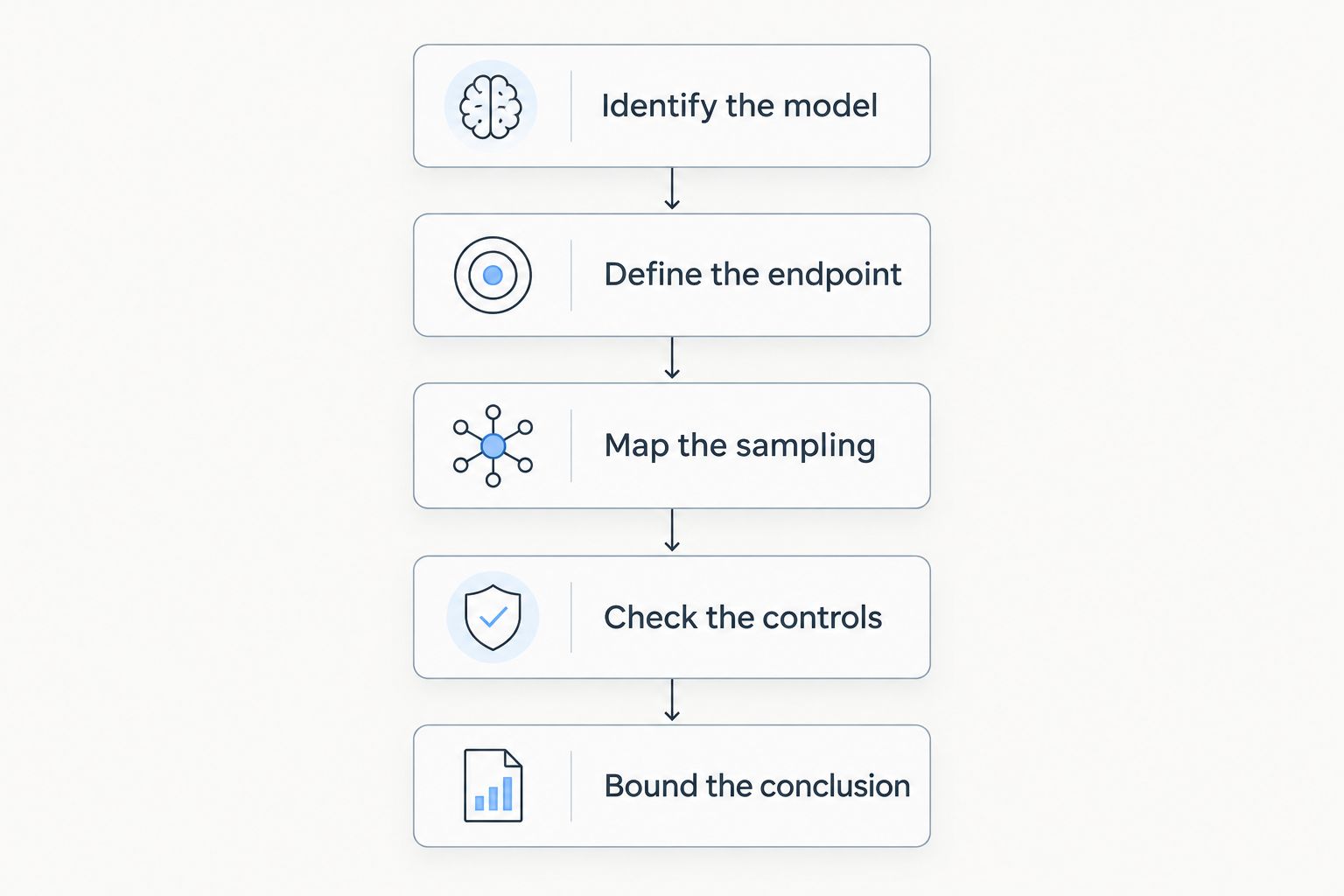
The useful output is an evidence record, not an isolated duration. Another researcher should be able to trace your timing statement back to the experiment without guessing which measurement you meant.
What epitalon chemistry tells you—and what it does not
Epitalon is a tetrapeptide containing 4 amino acid residues, commonly represented as Ala–Glu–Asp–Gly. That structural description identifies the sequence; it does not specify how quickly an experimental readout will change.
Sequence information and biological timing answer 2 separate questions: what material is being studied, and what the experiment detects over time. Neither answer substitutes for the other.
A chemical identity claim therefore needs appropriate analytical support, while a timing claim needs experimental observations. Treating a known sequence as proof of a predictable response skips the evidence needed for the second question.
For your 2026 research records, keep nomenclature consistent across purchase documentation, analytical records, and study notes. If naming or sequence information differs between sources, resolve the discrepancy before combining their findings.
What should laboratory buyers check before sourcing epitalon?
For laboratory buyers assessing Alpha Omega Peptide, batch documentation is a better sourcing criterion than a promised epitalon timeline. Evaluate the material against your research requirements without treating a supplier description as experimental evidence.
Start with traceability. A certificate of analysis should be assessed against the material and batch it describes, with attention to the stated methods and reported findings. A document detached from a specific material record has limited value for qualifying that material.
High-performance liquid chromatography, or HPLC, can support purity assessment under the reported analytical conditions. A purity result alone does not establish identity, quantify every possible impurity, or demonstrate biological activity. Read the method and scope instead of relying on a headline percentage.
Apply the same standard to Alpha Omega Peptide research-peptide sourcing as to any other supplier: distinguish documents you can inspect from claims you cannot independently assess. This is an evaluation framework, not a claim about a particular batch or testing arrangement.
Storage and handling records belong in the assessment too. Use material-specific documentation and your laboratory’s validated procedures rather than assuming that a general storage rule establishes stability for every preparation.
Does an epitalon COA establish how quickly an assay will change?
No. A certificate of analysis describes the tests and findings reported for the material; it does not establish when a separate biological assay will detect a change. That question requires experimental evidence from the relevant system.
Even well-characterized material does not remove the need for controls. Material qualification supports the experiment, but it does not replace the experiment.
Can you compare epitalon timelines across different papers?
Yes, when you preserve the differences in models, endpoints, exposure conditions, and sampling schedules. Compare like-for-like observations first, and keep unmatched findings in separate categories.
A 2026 evidence table should retain the original reported units and identify what each duration represents. Avoid collapsing exposure length, first detection, and final observation into a single timing column.
Does a longer experiment establish a stronger finding?
No. A longer observation period extends the window examined, but strength of evidence also depends on the experimental design, controls, assay performance, and reproducibility.
Choose a study because it addresses your research question, not because its duration sounds more substantial. An appropriately designed shorter experiment can answer a different question from a longer one without either supplying a universal timeline.
Preguntas frecuentes
How long does epitalon take to show effects in a laboratory assay?
Epitalon timing is specific to the experimental model, endpoint, and sampling schedule. Use the observations reported in the relevant study rather than assigning a universal duration.
Is the first positive measurement the same as the onset time?
No, the first positive measurement identifies the earliest sampled point at which the study detected the specified difference. It does not establish what happened during earlier unmeasured intervals.
What is epitalon’s amino acid sequence?
Epitalon is a tetrapeptide commonly represented as Ala–Glu–Asp–Gly. Its sequence identifies its 4 amino acid residues but does not determine an assay-specific response timeline.
Does an HPLC purity result predict epitalon activity?
No, an HPLC purity result does not predict biological activity or its timing. Interpret the result within the scope of the analytical method and assess biological observations separately.
Is a time-course experiment better than an endpoint measurement?
A time-course experiment is better suited to examining change across sampled intervals. An endpoint measurement remains useful for a defined comparison, but it provides less temporal information.
What should I review when assessing Alpha Omega Peptide for laboratory sourcing?
Review batch-specific documentation, the scope of analytical testing, material identification, and handling information against your laboratory’s requirements. Do not treat a sourcing claim as evidence of experimental timing.
Can I combine timing findings from different experimental models?
Keep findings from different models separate unless your analysis explicitly accounts for their differences. A shared compound name does not make distinct endpoints or sampling schedules equivalent.
Una última cosa
An endpoint is a timestamp, not a stopwatch. Before accepting any epitalon timing claim, ask which earlier observations support it. If there are none, describe the finding as a difference observed at the measured endpoint—not as the moment the change began.
That single wording choice makes your research summary more precise without adding another experiment or overstating the evidence.
Guías relacionadas
- COA batch lookup and verified peptide purity
- Peptide vendors compared by third-party lab testing
- Cómo almacenar péptidos reconstituidos en el refrigerador
Solo para uso en investigación de laboratorio. No apto para uso humano ni veterinario. No está destinado a diagnosticar, tratar, curar ni prevenir ninguna enfermedad.